

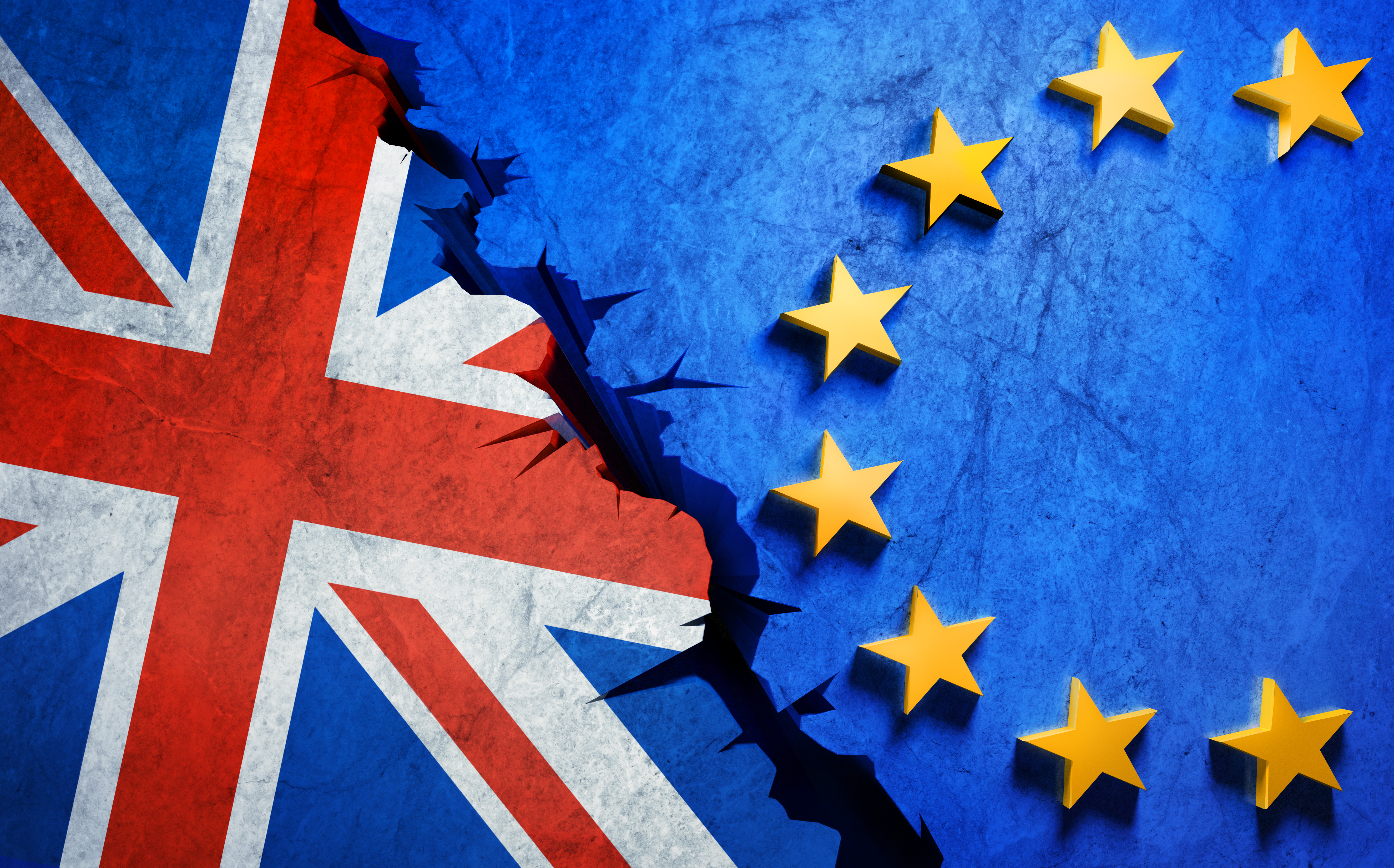
Brexit: The Morning after the Night Before
The British Prime Minister, Mrs Theresa May, lost the Parliamentary vote on the withdrawal agreement negotiated with the European Union last night (15th January 2019) by 230 votes. It is the largest parliamentary defeat for a UK government in over a hundred years. If, as predicted, the resulting vote of no-confidence in the government is nevertheless defeated itself this evening (16th January 2019), Mrs May is due to return to Parliament next Monday (21st January 2019) with her Plan B. If there is no negotiated agreement on Britain’s divorce from the EU, ‘Brexit’ is scheduled to happen in just over ten weeks’ time on 29th March 2019.
Whether its questions are about access to the United Kingdom market or about imports from the United Kingdom arriving in the EU: what happens next really matters to business. Immediate reactions within the Parliament chamber called for a postponement of the 29th March deadline. But unless and until that happens, the default legislative position remains that (in accordance with the notice given under Article 50 of the Treaty on European Union) the UK will leave the EU and become a ‘third country’ that night.
There does seem to be a cross-party majority in the UK Parliament against a disorderly exit from the EU. However, as the Prime Minister remarked immediately after hearing the result of the vote rejecting the withdrawal agreement, it remains unclear what other arrangement (if any), and on what terms, could command the support of a majority of MPs and also be accepted by the EU.
So, in summary, the clock is currently ticking down towards a disorderly Brexit. Notwithstanding the statements and documents issued by both the British government and the EU, businesses on both sides of the Channel do not generally seem prepared for a ‘no-deal’ exit. Even if, contrary to some expectations, the pound sterling (UK£) did not suffer a dramatic fall in value after the vote, uncertainty is already affecting orders and investments, particularly in the UK.
If you’re a business that trades across borders with the UK and, for example, you rely on just-in-time supply chains (and there are many manufacturing businesses beyond automobiles, for example in the food and drink industry that have such supply chains), the prospect of a ‘no-deal’ exit has serious negative implications. Some argue that last night’s vote makes such an outcome more, rather than less, likely. So, even if you are an optimist and resistant to incurring costs unnecessarily, it is very much time to assess the possible impacts of ‘no-deal’ on your business and take counter measures.
As a first step, it’s useful to know that a ‘quick-scan’ for possible issues can be made using a free tool available from the website of the FOD Economie / SPF Economie (Belgian Federal Economic Services) (the tool is available in Dutch, French and German language versions). Even if the tool acknowledges that it has limitations, using it should enable you to identify potential supply chain problems. Check whether you may be faced with additional customs verifications, tariffs or procedures (= potential delays) for imports from or exports to the UK.
In the case of a ‘no-deal’ Brexit, imports from the UK will be subject to the EU WTO import tariffs. The EU’s import tariffs, adopted in-line with its WTO obligations, are published and ‘knowable’. (They are applicable to all the countries with which the EU does not have a trade agreement.) You can look-up what they are for any products that you import.
As one example, beef imports (high quality, boneless, fresh or chilled) to the EU from any ‘third country’ are subject to a compound EU WTO import tariff (i.e. a tariff calculated partly by customs value and partly by weight) of 12.80 % (ad valorem) + 303.40 EUR / 100 kg.. Based on 2016 prices, the Irish Agriculture and Food Development Authority calculated that in percentage terms that amounts to a sixty percent (60%) tariff.
Another important area for verification concerns the terms and conditions of your contracts. For example: Is there a territorial clause which assumes that the United Kingdom is a member of the European Union? What is the currency for payment? What law is the contract subject to? Is there a mechanism for contract review in light of changed circumstances? Is there a mechanism for adjusting prices and if so on what basis? How would any additional costs incurred as a result of Brexit be allocated as between the parties?
While a negotiated Brexit settlement, including a transitional period during which a free trade agreement can be negotiated, may yet be possible: every prudent business will take into account that the time within which such arrangements can be reached is, currently, very short indeed.
* Len Hawkes is a solicitor, England and Wales, and is in charge of FLINN’s Brexit Desk.
Read More


Online platforms : Commission sets new standards on transparency and fairness – Brussels 26 april 2018
The European Commission has proposed a Regulation that would provide new rules for Online Platforms (OP). The aim is to create a fair, transparent and predictable business environment for smaller businesses and traders when using OP. Ultimately, it will also benefit European consumers.
Read More
Strengthened EU data protection rules become a reality in just over 100 days !
With just over 100 days left before the application of the new General Data Protection Regulation (“GDPR”), the European Commission has published new guidance that outlines what remains to be done, including additional guidance for SMEs.
Read More
Is the GDPR applicable in a (pure) B2B Context ?
On Tuesday, 6th December, we had our second client workshop about the GDPR. The diverse audience included retailers, manufacturers in the food and beverages industry, franchise networks, IT, healthcare and financial sector companies as well as invitees from national and European federations active in retail and distribution.
There were diverging views on the way in which the GDPR and ePrivacy Directive (which is also due to be replaced by EU regulation) will apply in a (pure) B2B context. It seems clear that prior informed consent is the sole basis for B2C e-mail marketing. However the current text of the (draft) ePrivacy Regulation is ambiguous as to whether a distinction can be drawn between corporate email addresses and individual email addresses. Nevertheless, ‘named’ corporate B2B data (e.g. firstname.familyname@company.com) is clearly personal data and should therefore be processed in line with GDPR. B2B marketers will therefore need to make a choice between using Consent, the so called ‘soft opt-in’ where there is an existing client relationship, or Legitimate Interest for their electronic communications.
Perhaps recital 47 to the GDPR which states (amongst other things) that ‘processing of personal data for direct marketing purposes may be regarded as carried out for a legitimate interest’ will provide some useful guidance. One thing is for sure the GDPR is yet to reveal all of its secrets !
Read More
Leonard Hawkes is a certified Privacy Professional (CIPP) and appointed as DPO of FLINN
The partners of FLINN are delighted to announce the appointment of Leonard Hawkes as DPO (Data Protection Officer) at FLINN and his IAPP Certification as a ‘Certified Information Privacy Professional/Europe’ (CIPP/E) as of today.
These developments are further confirmation of FLINN’s commitment to offering high quality legal services in the digital economy.

Flinn has become a member of Lawrope at the AGM in Monza
Flinn Lawfirm was represented in Monza at the annual general meeting of Lawrope International Group of Lawyers . The ever-changing needs of companies and individuals operating in this environment require the skills of an established multinational group of lawyers.
Read More
The International Comparative Legal Guide to: Franchise 2018 has been published !
Advice on Franchising, whether for local and international franchise networks, or for franchisees (including multi-franchisees), is one significant component of FLINN’s practical focus on Distribution law…
Read More
The Flinn Cup was sailed in Ostend during the first weekend of September
FLINN promotes sports and we love competition as it helps to make us fit and sharp !
Read More
Benoit Simpelaere and Leonard Hawkes will speak at the 11th M&A Conference in Düsseldorf
Benoit Simpelaere and Leonard Hawkes will speak about “Consensualism, Good Faith & Applicable Law in Cross-border M&A Deals” …
Read More